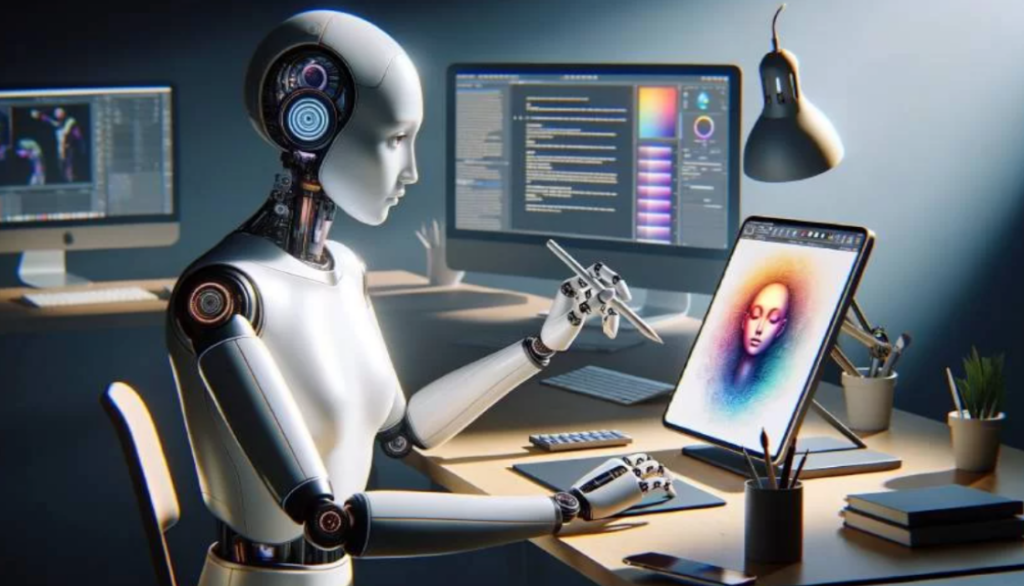
The narrative of 2024 and 2025 was dominated by a singular, suffocating premise: the artist is obsolete.
Tools like Sora, Runway, and Grok were framed as the executioners of the 2D animation industry. Critics and tech evangelists predicted that by 2026, the traditional pipeline of rigging, keyframing, and vector illustration would be replaced by a single prompt box.
However, as we move through the second quarter of 2026, the “AI gold rush” has encountered a harsh geological reality. The dust has settled, the hype cycles have slowed, and the structural “cracks in the wall” are becoming impossible to ignore. For professional studios and independent creators, the landscape has shifted from a state of existential panic to one of calculated analysis.
At Muyano.com, we have spent years tracking these technological shifts to ensure our readers stay ahead of the curve. Furthermore, our production arm at studio.muyano.com continues to prove that high-end, bespoke 2D animation requires a level of intentionality that current generative models simply cannot replicate. The “threat” wasn’t a shark; it was a tide—and tides eventually recede.
1. The Economic Mirage: “Compute” Isn’t Free
The primary reason Generative AI (GenAI) has not monopolized the 2D market is fundamentally economic. In the early days, OpenAI and its competitors offered subsidized access to high-compute models to capture market share. In 2026, the venture capital subsidies have largely evaporated.
The Cost of “Infinite” Renders
Generating high-fidelity video is an ecological and financial nightmare. A single minute of AI-generated video requires a staggering amount of GPU hours. When companies realized that “giving away” renders was burning through billions in cash with no clear path to profitability, they moved behind steep paywalls.
| Production Factor | Generative AI (2026) | Professional 2D Pipeline |
| Predictability | High variability; “Slot machine” results | Fixed costs; Milestone-based |
| Compute Cost | Rising exponentially with resolution | Static (Software licenses/Hardware) |
| Scalability | Limited by server availability | Scalable via human talent/render farms |
| Revisions | Requires entire re-generation | Targeted node/keyframe adjustments |
For a business, unpredictability is the ultimate enemy. A studio cannot build a sustainable model on a “casino” of computation. The human artist, equipped with specialized software, remains a more predictable and cost-effective asset for long-term production.
2. The Granular Control Crisis
In professional animation, “close enough” is a failure. If a client at studio.muyano.com requests a character to wear a specific shade of teal ($#008080$) and demands that their glasses remain on their forehead during a 360-degree turn, we execute that with mathematical precision.
The Problem with Prompt-Based Direction
GenAI operates on probability, not logic. It struggles with:
- Vector Integrity: AI generates pixels, not paths. For 2D animators, the ability to scale and manipulate vector points without quality loss is non-negotiable.
- Technical Specificity: “Make the line weight 2px thinner on the shadow side” is a command that AI frequently hallucinates or ignores.
- Temporal Consistency: While “flicker” has been reduced in 2026, the underlying structural stability of a character’s anatomy across a three-minute sequence still fails under professional scrutiny.
In tools like Moho or After Effects, we don’t “ask” the software to move a limb; we command it. This distinction between “prompting” and “authoring” is why the specialized artist remains the gatekeeper of quality.
3. Technical Debt in AI Workflows
One of the most overlooked aspects of the AI “threat” is the concept of technical debt. When a studio uses a generative tool to create a background or a character, they are essentially using a “black box.” If the client requests a change three months later, and the model’s weights have been updated or the seed is lost, that asset becomes a dead end.
The Asset vs. The Image
A professional 2D animator creates assets. These are modular, reusable, and editable. A GenAI tool creates images. The lack of layers, rigs, and editable curves means that any significant pivot in a project requires starting from zero. In a fast-paced commercial environment, the “speed” of AI is negated by its lack of flexibility during the revision phase.
4. The Evolution of the 2D Craft
History shows that technology rarely kills an art form; it kills a specific methodology. The transition from physical acetate cels to digital ink-and-paint didn’t end animation—it expanded it. Similarly, the shift from frame-by-frame drawing to vector rigging in the early 2000s allowed smaller teams to produce feature-quality work.
The “Assistant” Model
The animators flourishing in 2026 are those who view GenAI as a sophisticated intern rather than a replacement. We use it for:
- Rapid Storyboarding: Generating loose visual ideas to find a mood.
- Texture Generation: Creating unique patterns to be mapped onto 2D rigs.
- Reference Gathering: Using AI to simulate lighting setups before painting final backgrounds.
The “threat” is only real for those who refuse to evolve. If your value proposition is merely “I can draw a circle,” the AI is a threat. If your value is “I can tell a story that resonates with a specific demographic while maintaining brand guidelines,” you are indispensable.
5. The Psychology of Human Narratives
As we discuss frequently on the Muyano.com blog, animation is an exercise in empathy. An AI can mimic the look of a Miyazaki film, but it cannot understand the why behind a character’s hesitation or the subtle comedic timing of a squash-and-stretch movement.
The Soul in the Machine
Professional 2D animation often relies on “breaking” the rules of physics for emotional effect. AI is trained on what is “probable,” which often results in a “uncanny valley” of motion that feels soulless. Clients in 2026 are increasingly seeking “Hand-Crafted” or “Human-Verified” content as a premium marker. In an ocean of AI-generated noise, the human touch has become a luxury good.
Conclusion: The Path Forward
The “Great Extinction” of the artist didn’t happen because the market realized that precision, control, and personality are the true currencies of the industry. At studio.muyano.com, we embrace the future by doubling down on our expertise. We don’t fear the machine; we master it.
The current “breathing room” we feel in the industry is not a sign that the technology has failed, but that it has found its proper place: as a tool in the belt of a master craftsman. For entrepreneurs and creators, the lesson is clear: Invest in your technical depth. The AI can generate an image, but it cannot build a brand, it cannot navigate a complex client brief, and it certainly cannot replicate the 25 years of intuition that a professional brings to the table.
Stay curious, stay technical, and remember that the most powerful processor in the world is still the one between your ears.
For more insights into the intersection of AI and professional animation, visit our archive at www.muyano.com. If you need precision-engineered 2D animation that goes beyond the capabilities of a prompt, explore our services at studio.muyano.com.