A Study in UI Evolution and Market Disruption
In the current era of high-fidelity ray tracing and open-world survival mechanics, the “Point-and-Click” adventure stands as a foundational pillar of modern User Interface (UI) design and narrative-driven game development. What began as a technical workaround for the limitations of 8-bit processing evolved into a multi-million dollar industry that defined the PC gaming landscape of the 1990s.
From a business and technical perspective, the transition from text-based parsers to graphical interfaces represents one of the most significant “pivots” in software history. This article analyzes the rise, fall, and eventual resurgence of the genre, focusing on the technical workflows and the competitive dynamics between industry titans.
The Architecture of Innovation: Sierra On-Line vs. LucasArts
The late 1980s were characterized by a fierce ideological and technical battle between two California-based studios: Sierra On-Line and Lucasfilm Games (later LucasArts). This wasn’t just a competition for shelf space; it was a conflict over Player Retention Models and Engine Scalability.
The Sierra Model: High Stakes and Punishment Mechanics
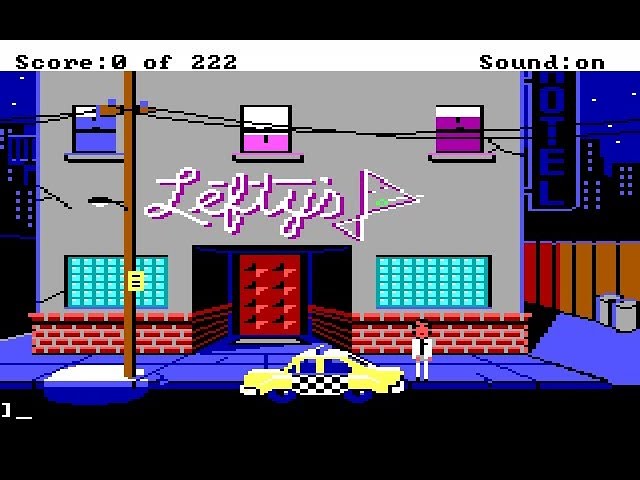
Under Ken and Roberta Williams, Sierra utilized a “High Friction” model. Games like Leisure Suit Larry (1987) and King’s Quest were notorious for punishing player error with permanent “Game Over” screens. From a monetization standpoint, this difficulty served a secondary purpose: it fueled the demand for physical “Hint Books” and phone-in tip lines, which were significant revenue streams before the democratization of the internet.
The LucasArts Revolution: The SCUMM Engine
The real disruption occurred with the development of the SCUMM (Script Creation Utility for Maniac Mansion) engine, created by Ron Gilbert. Technically, SCUMM was a breakthrough in object-oriented game design. It allowed designers to create complex scripts without needing to rewrite the core engine code for every new title.
By replacing the text parser (where users had to type “Open Door”) with a verb-based GUI (clicking the word “Open” then the “Door”), LucasArts lowered the barrier to entry. This was the first major step toward Intuitive UX in gaming, shifting the focus from “guessing the right word” to “solving the logic of the world.”
The Golden Era (1990–1995): Narrative Scalability and Technical Excellence
As hardware shifted from VGA to SVGA and CD-ROMs became the standard storage medium, the Point-and-Click genre entered its “Cinematic Phase.” Studios began to treat game development as a film production, integrating professional voice acting and complex animation pipelines.
The “No-Death” Philosophy: UX as a Competitive Advantage
The Secret of Monkey Island (1990) introduced a radical design philosophy: the player could not die. Ron Gilbert’s decision to remove “failure states” was a strategic move to increase the “Lifetime Value” of the player experience. By focusing on humor (such as the legendary Insult Sword Fighting) and exploration, LucasArts secured a loyal demographic that valued narrative immersion over the frustration of trial-and-error gameplay.
Technical Milestone: The iMUSE System
One of the most overlooked technical achievements of this era was the iMUSE (Interactive Music Streaming Engine). Developed by Michael Land and Peter McConnell, iMUSE allowed the game’s soundtrack to synchronize dynamically with the player’s actions. If a character walked into a dangerous area, the music would transition seamlessly—not with a jarring cut, but through a calculated harmonic shift. This was a precursor to the adaptive audio engines used in modern “AAA” titles today.
Multi-Path Narratives: Indiana Jones and the Fate of Atlantis (1992)
LucasArts demonstrated the potential for “Replayability Value” with The Fate of Atlantis. By offering three distinct paths (Team, Wits, or Fists), the developers effectively tripled the content without needing to triple the graphical assets. This was a masterclass in Asset Efficiency, a core principle in modern indie game development.
The Peak of 2D Animation: Day of the Tentacle and Full Throttle
By the mid-90s, the animation workflows for graphic adventures reached a zenith that mirrored high-end television production.
- Day of the Tentacle (1993): This title utilized a “squash and stretch” animation style reminiscent of Chuck Jones’ Looney Tunes. It required a rigorous pipeline of hand-drawn frames that were then digitized and compressed for the SCUMM engine.
- Full Throttle (1995): Led by Tim Schafer, this project introduced a more mature, cinematic tone. It was one of the first titles to leverage a full digital soundtrack (by The Gone Jackals) and celebrity voice talent like Mark Hamill. It proved that the Point-and-Click genre could scale beyond “quirky puzzles” into the realm of high-octane road movies.
The 3D Trap: Grim Fandango and the Decline of the Genre
In 1998, the industry faced a paradigm shift: the “3D Revolution.” Fueled by the success of the Sony PlayStation and graphics accelerators like the 3dfx Voodoo, the market demanded polygons over pixels.
LucasArts responded with Grim Fandango, a technical masterpiece that used 3D character models over pre-rendered 2D backgrounds. Despite being a critical darling, the game suffered from “Tank Controls”—a clunky navigation system that abandoned the mouse in favor of keyboard movement. This technical mismatch, combined with a broader market shift toward first-person shooters (FPS), led to a commercial stagnation of the genre. The “Grand Narrative” adventure was deemed too expensive and too slow for the burgeoning “fast-twitch” gaming market.
The Modern Resurgence: Remasters and the Indie Pivot
The genre did not die; it evolved into a “Niche Premium” market. The rise of digital distribution platforms like Steam and GOG (Good Old Games) allowed developers to bypass traditional retail gatekeepers.
The Remastering Pipeline
Studios like Double Fine (founded by Tim Schafer) pioneered the Remastering Workflow. This involves taking original source code—often salvaged from old disquettes—and upscaling the assets for 4K resolutions. The technical challenge here is maintaining the “Artistic Integrity” of the original pixels while providing a smooth visual experience on modern displays. Titles like Day of the Tentacle Remastered allow users to toggle between “Classic” and “Remastered” modes in real-time, showcasing the evolution of rendering technology.
Return to Monkey Island (2022)
The return of Ron Gilbert to the franchise he created was a significant cultural moment. It demonstrated that a legacy IP could be modernized with a controversial, stylized art direction that prioritized Expression over Realism. This is a key lesson for modern entrepreneurs: brand loyalty is powerful, but your product must evolve visually to compete in a crowded digital marketplace.
Cybersecurity and Ethical Consumption in Retro Gaming
As nostalgia drives users back to these classics, there is a significant Cybersecurity Risk associated with “Abandonware” sites. Many unofficial repositories offer “cracked” versions of 90s games that are frequently bundled with:
- Trojanized DLLs: Malicious files that execute when the game’s executable is launched.
- Cryptojacking Scripts: Hidden background processes that utilize the user’s CPU to mine cryptocurrency.
- Adware Injections: Browser hijackers that monetize the user’s traffic.
To maintain “Operational Security” (OpSec), I strongly advise entrepreneurs and fans to utilize official digital storefronts like GOG.com. GOG specializes in the technical “wrapping” of old games—using tools like DOSBox and ScummVM—to ensure they run natively on Windows 11 without compromising the system’s integrity.
Conclusion: The Enduring Legacy of the Point-and-Click
The Point-and-Click genre was the first to prove that video games could be a sophisticated medium for storytelling and social satire. It pioneered the UI/UX standards we take for granted today, such as the context-sensitive cursor and the interactive dialogue tree.
For the modern entrepreneur or developer, the history of LucasArts and Sierra is a case study in Market Adaptation. The genre survived not by trying to become an action-RPG, but by doubling down on what it does best: world-building and intellectual challenge. The throne of the graphical adventure may have changed shape, but in the era of indie-driven “micro-universes,” the click is more powerful than ever.